


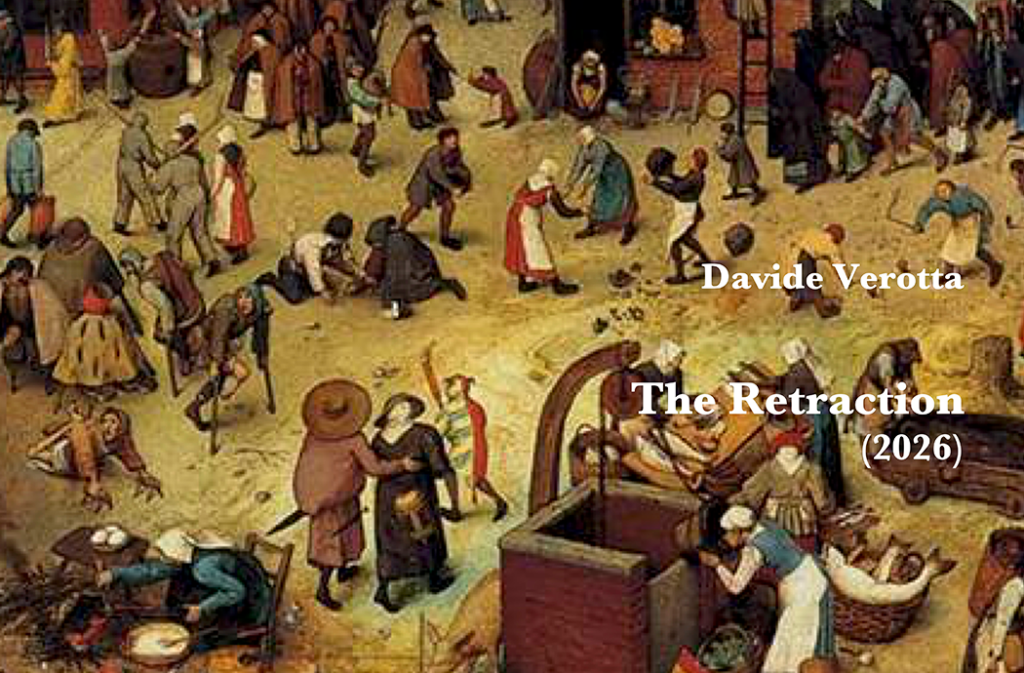
In the small town of Auldearn, Scotland, in 1662, a peasant woman named Isobel Gowdie was caught in the gears of a brutal legal system. Unlike many of her peers, whose stories were lost to time, Gowdie’s trial left behind a chillingly detailed paper trail. This April, her words return to the stage at CMC in The Retraction, a dramatic song cycle by composer and CMC faculty member Davide Verotta.
Verotta, who moved from Italy to San Francisco in his twenties, has built a career balancing the logic of mathematics as a UCSF professor with the emotional depth of contemporary music. For this project, he found himself drawn to the dark history of the 17th century.
“When I started this project, I had a few reasons for writing a piece about witches,” Verotta explained. “Eventually, considering the time we find ourselves living in, I settled on writing a commentary on witch hunts, taking inspiration from the historical record of the trial of Isobel Gowdie.”
What makes Gowdie’s story so unique for a composer is the sheer volume of material she left behind—even if it was coerced.
“What is significant about Isobel Gowdie’s trial is that she gave four long and detailed confessions, which are documented in the trial transcript,” Verotta said. “This is very rare; most often no testimony is left from people accused of witchcraft. Made over a period of six weeks, likely under torture, the confessions include details of twenty-seven spells; claims that she had carnal dealings with the devil… and mentions of killing of people, animal sacrifices, and transforming into animals.”
The upcoming performances on April 24 and 25 feature a powerful ensemble of talented musicians. Soprano Amy Foote leads the vocal performance, joined by a three-voice choir featuring tenors Emilio Peña and Tim Selva, and bass Sidney Chen. The musical landscape is rounded out by a mixed chamber group including Michael Long (violin), Jessie Nucho(flute), Vicky Ehrlich (cello), and Keisuke Nakagoshi (piano). Together, they will navigate the complex legacy of a woman who has been called everything from a madwoman to a proto-feminist icon.
For Verotta, the music is about more than just history; it is about giving a voice back to someone who was silenced by an unjust society.
“Isobel Gowdie has been seen in many ways since her four confessions were rediscovered,” Verotta noted. “The Retraction… serves partly as a timely warning of the perils of irrational thought and unchecked power, but mainly seeks to give a voice to Isobel—a young woman at the bottom of the social order, destroyed by the wheels of a brutal and unjust society.”
If You Go
- What: The Retraction by Davide Verotta
- When: Friday, April 24 & Saturday, April 25, 2026, at 8:00 pm
- Where: CMC Concert Hall, 544 Capp Street, San Francisco
- Tickets: $25 General Admission / $15 Seniors & Students
- Pro Tip: CMC community members get 50% off advanced tickets with code CMC-THERETRACTION.
THE RETRACTION
When I started this project, I had a few reasons for writing a piece about witches. Eventually, considering the time we find ourselves living in, I settled on writing a commentary on witch hunts, taking inspiration from the historical record of the trial of Isobel Gowdie, a peasant woman tried for witchcraft in Auldearn in Scotland in 1662.
What is significant about Isobel Gowdie’s trial is that she gave four long and detailed confessions, which are documented in the trial transcript. This is very rare; most often no testimony is left from people accused of witchcraft. Made over a period of six weeks, likely under torture, the confessions include details of twenty-seven spells; claims that she had carnal dealings with the devil, that she was a member of a coven in his service, and that she met with the fairy queen and king; and mentions of killing of people, animal sacrifices, and transforming into animals. The record of her sentence is lost, but almost certainly she was put to death with someone named Dawglas, Janet Breadhead and her husband John Taylor, and many others implicated in her confession.
Isobel Gowdie has been seen in many ways since her four confessions were rediscovered: as a mad woman, as a proto-feminist, and as an icon of Wicca communities. The Retraction, framed as a dramatic song cycle for soprano, three-voice choir, and mixed ensemble, serves partly as a timely warning of the perils of irrational thought and unchecked power, but mainly seeks to give a voice to Isobel—a young woman at the bottom of the social order, destroyed by the wheels of a brutal and unjust society.